FIELDMIND AUTONOMY PLATFORM
One field robotics foundation. Multiple missions.
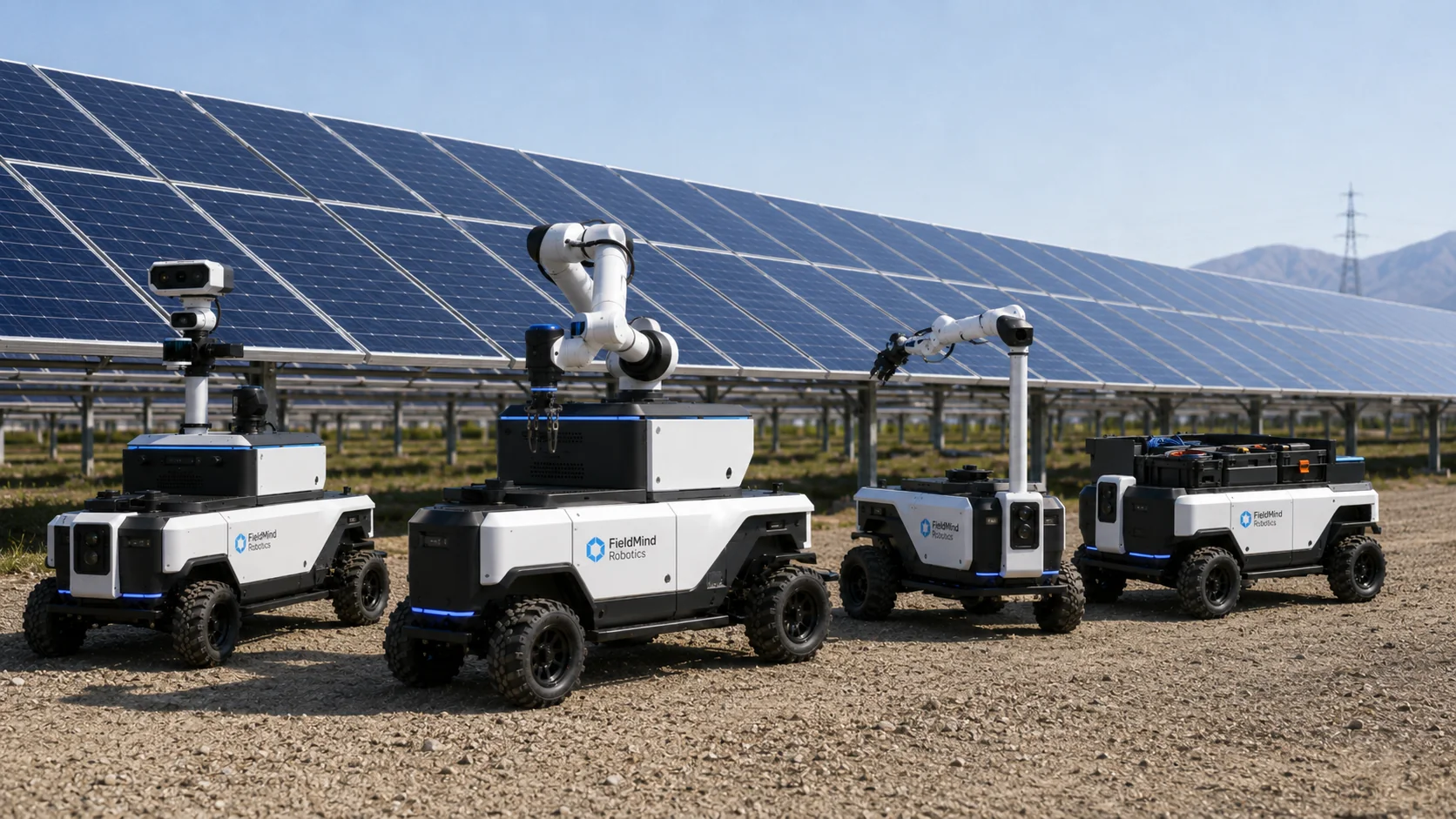
FieldMind combines autonomous mobility, multimodal perception, robotic manipulation and mission intelligence in a modular platform designed for outdoor solar environments.
- 01
Mobility
Rugged autonomous navigation across solar rows, service lanes and field work zones.
- 02
Perception
RGB, thermal, depth and spatial sensing to understand assets, people, tools and the surrounding environment.
- 03
Manipulation
Robotic arms, end effectors and task-specific tools for physical interaction with components and structures.
- 04
Autonomy
Mission planning, localisation, perception and task execution designed to turn field workflows into repeatable robotic skills.
PLATFORM LAYERS
Five layers, shared across every mission.
The stack below is what stays constant when the payload changes. Detailed algorithms and internal architecture are not published at this stage.
- 01
Field Mobility
- Autonomous navigation
- Route execution
- Work-zone localisation
- Obstacle awareness
- Mission return / recharge readiness
- 02
Machine Perception
- RGB vision
- Thermal imaging
- LiDAR / depth sensing
- Object and asset recognition
- Work-area understanding
- 03
Robotic Manipulation
- One- or two-arm configurations
- Grippers and task tools
- Component interaction
- Force-aware task execution where supported
- Tool-changing roadmap
- 04
Mission Intelligence
- Task planning
- Skill execution
- Workflow sequencing
- Operator supervision
- Exception handling
- Task records
- 05
Fleet + Data Layer
- Robot mission status
- Field observations
- Asset-linked inspection records
- Task history
- Future fleet coordination
PLATFORM PRINCIPLE
Same brain. Different field job.
The commercial advantage is reuse. The same core software, autonomy stack, safety patterns, navigation behaviour and data architecture carry across every payload configuration—so work invested in one mission compounds into the next.
A construction-assist robot, an inspection rover and a logistics unit are not three separate engineering programs. They are the same foundation configured around a different field job.
Bring us a field workflow, not a robot spec.
The most useful conversations start with the task: what has to happen, how often, and what makes it hard today. Tell us that and we can talk about whether the platform fits.