
SOLAR
Robotics across the solar asset lifecycle.
Utility-scale solar is a distributed physical environment: thousands of components, long travel distances, repetitive tasks and decades of operations. FieldMind is designing a robotics platform around that reality.
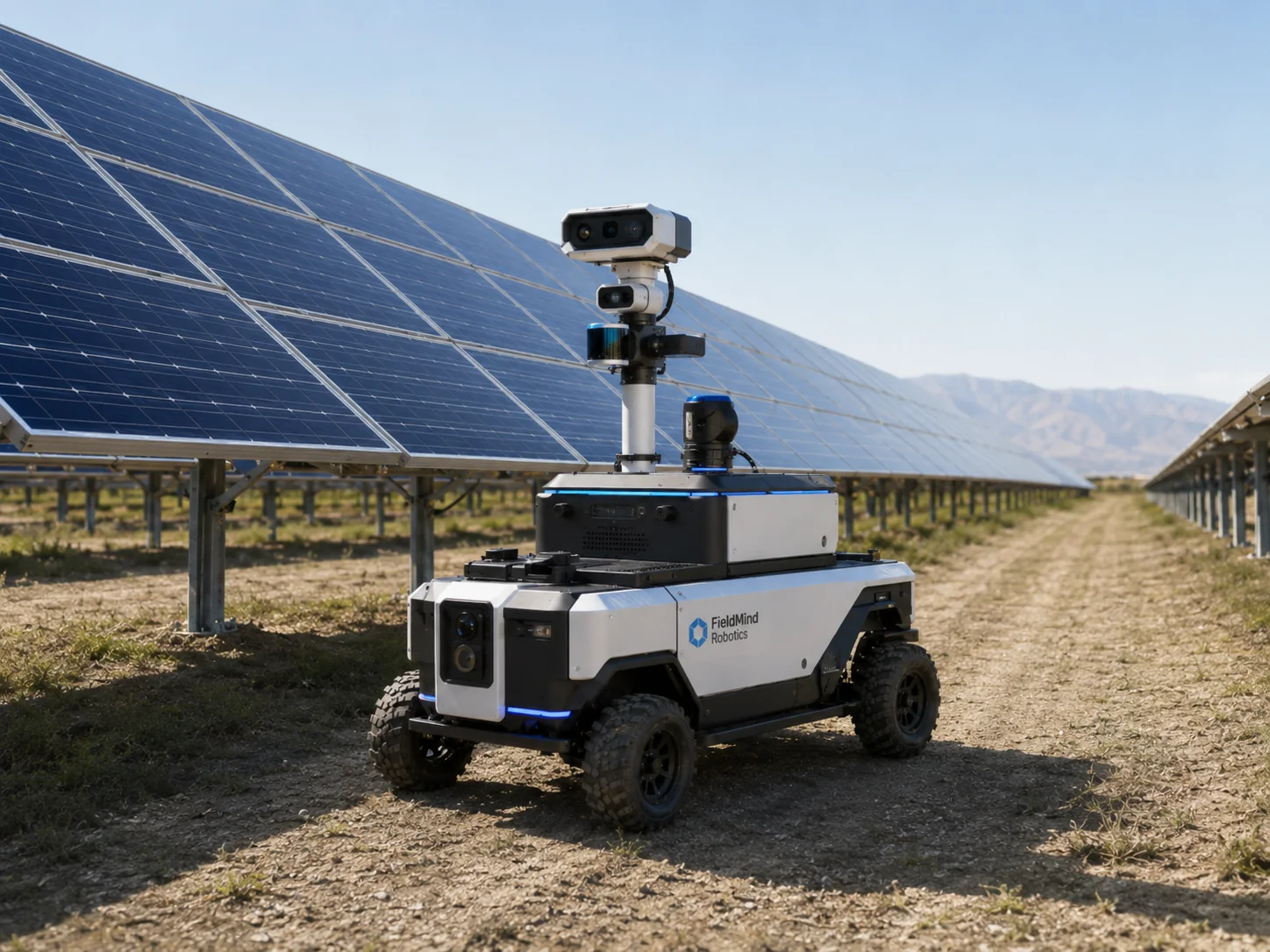
Concept visual. Product configuration and specifications are subject to change.
ACROSS THE LIFECYCLE
Four stages. One robotic foundation.
A solar asset moves from construction into decades of operation. The work changes at each stage; the platform underneath does not have to.
- 01
Construction
- Installation support
- Component delivery
- Fastening / clamp workflows
- Cable handling
- Field quality observations
- 02
Commissioning
- Visual verification
- Structured patrols
- Punch-list support
- Asset documentation
- 03
Operations
- Scheduled inspection
- Thermal screening
- Vegetation / obstruction awareness
- Route and perimeter monitoring
- 04
Maintenance
- Fault localisation
- Targeted robot-assisted intervention
- Replacement-part delivery
- Post-task verification
WHY SOLAR FIRST
Structured enough to automate. Real enough to be hard.
Solar farms combine repeatability with real-world complexity. They offer structured asset rows and recurring workflows, but also uneven terrain, outdoor exposure, distributed components and changing site conditions. That combination makes solar a compelling environment for practical field robotics.
WHO WE BUILD FOR
Different seat at the table, different problem.
Solar EPC contractors
Add robotic capacity to the repetitive work surrounding solar installation—without redesigning the entire construction process.
Developers and asset owners
Use one robotic platform across more of the solar asset lifecycle—from construction support to inspection and maintenance.
O&M providers
Move beyond inspection-only robotics toward systems that can detect issues and support physical intervention.
Technology partners
A modular field robotics platform designed to integrate specialised sensors, tools and mission payloads.
Where does your site still depend on hands?
Whether you are building, commissioning or operating, the starting point is the same: the repetitive work that is hardest to staff, inspect or maintain at scale.